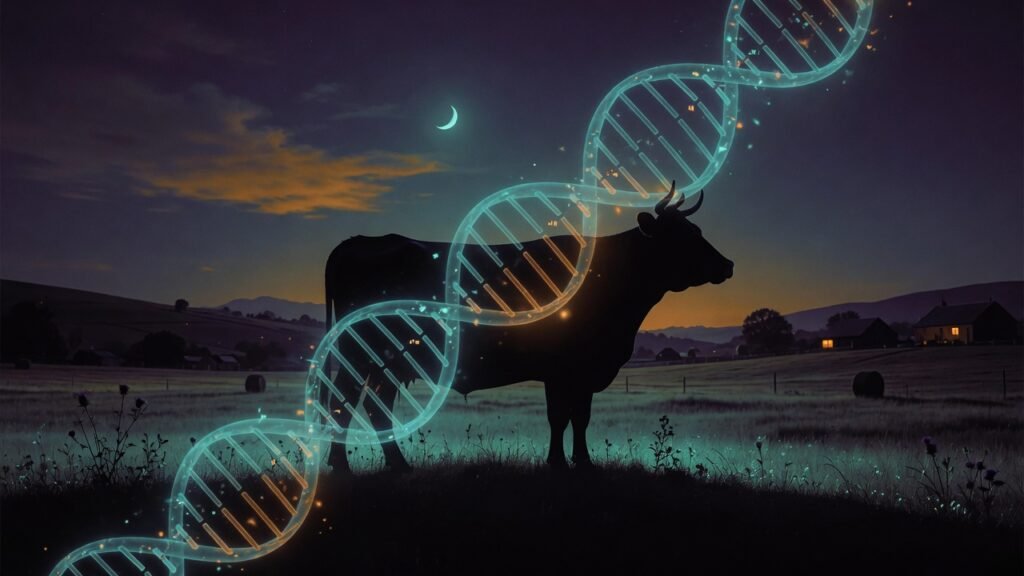
What if I told you that cows aren’t just a product of nature but the result of centuries of human engineering? Yes, those docile creatures grazing in fields are the culmination of deliberate intervention by ancient humans who domesticated wild buffalo. Over generations, they selectively bred them to create the milk-producing livestock we know today.
But the story doesn’t stop there. It delves deeper into a narrative of control, power, and manipulation—a hidden agenda by the elite. From the early domestication of buffalo to modern genetic engineering, humanity has continuously reshaped nature to serve its needs. The question is: at what cost?
Domestication or Domination?
The journey from wild buffalo to modern cows wasn’t just about convenience. It was a calculated effort to bend nature to human will. Traits like increased docility, higher milk production, and meat yield weren’t accidents of evolution; they were the result of deliberate selection. This wasn’t mere survival of the fittest—it was survival of the most profitable.
Ancient civilisations saw potential in wild buffalo-like creatures and began a process of selective breeding. Over centuries, they systematically altered these animals to create entirely new species that better suited their needs. The result? Modern cows that bear little resemblance to their wild ancestors.
Playing God: The Elite’s Obsession with Control
This pattern of control over nature continues today, but with far more advanced tools. Biotechnology and genetic engineering have taken the place of ancient selective breeding. Today, corporations and powerful elites manipulate the DNA of livestock, ensuring animals are bred for specific purposes—whether it’s cows that produce more milk, chickens that grow unnaturally fast, or crops that resist pests.
This isn’t just about efficiency. It’s about control—control over food production, consumer choice, and even the environment. The elite’s influence over the genetic makeup of animals reveals a larger agenda: bending the natural world to fit their desires while reaping immense profits.
The Health Implications of Engineered Cows
Every glass of milk you drink comes from an animal systematically altered to meet human needs. Modern cows are bred and sometimes genetically modified to increase milk production. Hormones, antibiotics, and the stress of unnatural breeding practices affect not just the animals but also the milk we consume.
The question is: can we trust the assurances of safety when the stakes are so high? With the elite controlling the food industry, profits often outweigh public health concerns. The milk we drink today is not the same as what our ancestors consumed; it’s a product of manipulation on every level.
Environmental Costs of Manipulating Nature
The drive to produce higher-yield animals and crops has far-reaching consequences. Monocultures, soil degradation, and increased greenhouse gas emissions are direct results of industrial agriculture’s obsession with control. The same practices that gave us modern cows now threaten the ecosystems we depend on.
Yet, those in power continue to prioritise short-term profits over long-term sustainability. The manipulation of cows is just one chapter in a larger story of environmental exploitation.
A Broader Perspective: Food, Power, and the Elite
The story of cows is more than just an agricultural tale; it’s a reflection of humanity’s obsession with reshaping the natural world. The elite have always sought to control not just animals but also plants, food systems, and, by extension, our lives. From ancient selective breeding to modern genetic engineering, they’ve blurred the line between natural evolution and engineered design.
This manipulation isn’t limited to livestock. Genetically modified crops, lab-grown meat, and synthetic foods are all part of the same agenda. The power to control food supply translates to influence over populations—a power that the elite have long sought to wield.
What’s in Your Glass of Milk?
Next time you pour a glass of milk, pause to consider its history. It’s not just a natural product; it’s the result of centuries of calculated breeding and genetic manipulation. The milk industry, like much of modern agriculture, is built on a foundation of control—control over animals, nature, and ultimately, us.
Conclusion: Question Everything
The transformation of wild buffalo into cows reveals a hidden truth about humanity’s relationship with nature: it’s one of domination and control. But this transformation raises deeper questions. Is this manipulation truly for our benefit, or is it another example of the elite reshaping the world to suit their own ends?
The story of cows is just one piece of a much larger puzzle—a puzzle where the powerful manipulate food, animals, and the environment to maintain control. It’s time to question the narratives we’ve been sold and consider the true cost of this manipulation—not just for ourselves but for the planet and future generations.
What do you think? Are we pawns in a game of power and control, or are these changes justified by progress? Share your thoughts below.