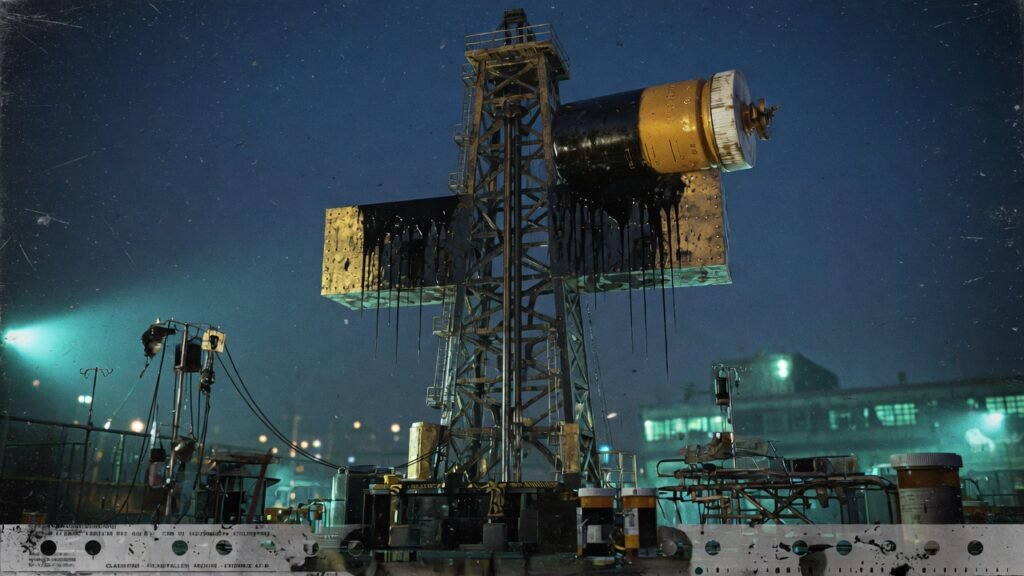
CLASSIFIED DOSSIER CORBETT REPORT 10 SECTORS
Rockefeller Medicine maps the capture of modern healthcare by industrial capital — oil money, foundation power, the Flexner purge, and the petrochemical pharmacy that still runs the system. Watch the Corbett Report episode, then walk every sector below.
Strip the fairy tale. This is not a celebration of “progress.” It is the documented capture of medicine by industrial capital — the same family that cornered oil building the schools, journals, and licensing system that still define “real” healthcare.
Sector 01 / 10 · Film
Table of Contents
Part 01 Watch: Rockefeller Medicine
Official Corbett Report embed · open on YouTube · show notes & MP3
Sector 02 / 10
Part 02 What the episode maps

As the public frets about websites, premiums, and insurance theatre, Corbett turns the page back to the early 1900s — when the modern medical paradigm was assembled by the Rockefeller Foundation and its network.
- How oil dynasties bought influence over medical education and research.
- How “scientific medicine” was redefined as patentable chemistry + hospital authority.
- How competing schools of healing were starved of legitimacy and funding.
- Why the United States ended up with among the highest healthcare costs on earth — and a population still sick.
Core thesis: Medicine was never a separate empire from oil. It was a vertical — feedstock, foundation, school, license, pharmacy, patient.
This is the same oiligarchy mapped in How Big Oil Conquered the World. The petrochemical web and the clinical monopoly are two floors of the same building.
Sector 03 / 10 · Chronology
Part 03 Timeline of the capture

A short spine of the story Corbett walks — not exhaustive, but enough to see the machinery assemble:
- Late 1800s–1900s — Standard Oil fortune consolidates. Philanthropy becomes strategy: foundations as soft power over science, education, and public health.
- 1901–1913 — Rockefeller Institute / Foundation era. Research and “reform” money starts steering universities and institutes toward laboratory, patent-friendly medicine.
- 1910 — Flexner Report — Carnegie-backed survey (with Rockefeller-aligned reform climate) grades medical schools. Schools outside the chemical-hospital model lose status, students, and survival odds.
- 1910s–1930s — Licensing, accreditation, and AMA-aligned professional power harden the pipeline: approved schools → licensed doctors → institutional “standard of care.”
- Mid–late 20th century — Petrochemical pharmacy scales. Chronic management, hospital billing, and foundation-funded consensus become the ambient culture of “trust the science.”
- Today — Debates rage over insurance portals and party brands. The operating system — who defines medicine, who owns the feedstock, who licenses the gate — barely gets named.
Archive note: When the same capital funds the schools, the journals, and the institutes that define “evidence,” independent healing is not a free market — it is a regulatory crime scene.
Sector 04 / 10
Part 04 Flexner Report & the purge

The Flexner Report (1910) is the polite name for a restructuring of medical education that closed or crippled schools that did not fit the new industrial-chemical model. Carnegie money fronted the report; Rockefeller-aligned capital powered the broader reform climate.
- Schools emphasizing herbalism, homeopathy, eclectic, and other non-patent models lost status, students, and often their doors.
- “Science” was equated with laboratory reductionism funded by foundations that also sat upstream of chemical supply chains.
- Licensing and accreditation locked the remaining pipeline — graduates of approved schools only.
- What looked like quality control from above looked like industrial selection from below: only the medicine that could scale as product would survive.
Flexner did not invent chemistry or hospitals. He helped consecrate one paradigm and starve the rest — under the banner of progress.
Sector 05 / 10
Part 05 Oil money → medicine
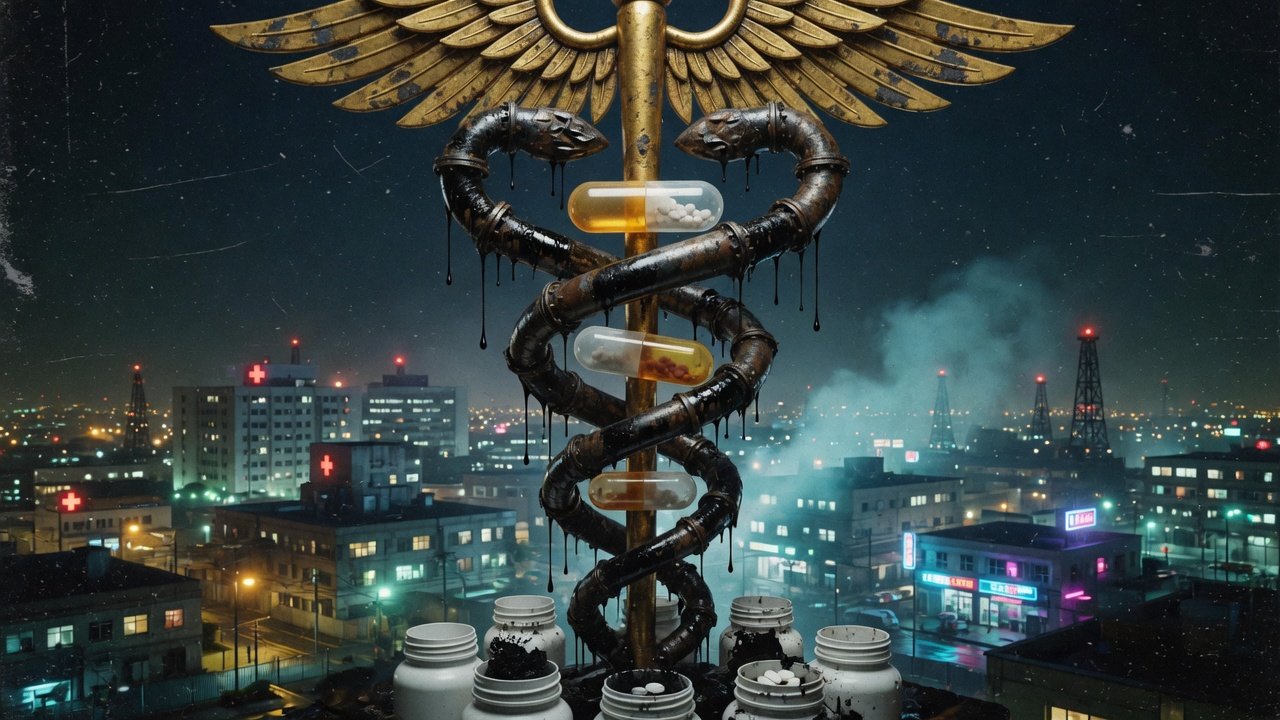
Rockefeller wealth did not “discover” medicine. It industrialized it:
- Oil refining produces feedstocks for dyes, solvents, and synthetic drugs — the chemical spine of the pharmacy aisle.
- Foundation grants steer universities toward research that patents and products can follow.
- Public health becomes a narrative tool — trust the institution, not the terrain of the body.
- Once medicine is a chemical product line, every patient is a recurring revenue event. Prevention that cannot be bottled is a threat.
Vertical integration: crude → chemicals → drugs → schools → licenses → “standard of care.” That is not conspiracy fanfic — it is industrial strategy with a white coat.
Pair this sector with the full petrochemical map in How Big Oil Conquered the World.
Sector 06 / 10
Part 06 Petrochemical pharmacy
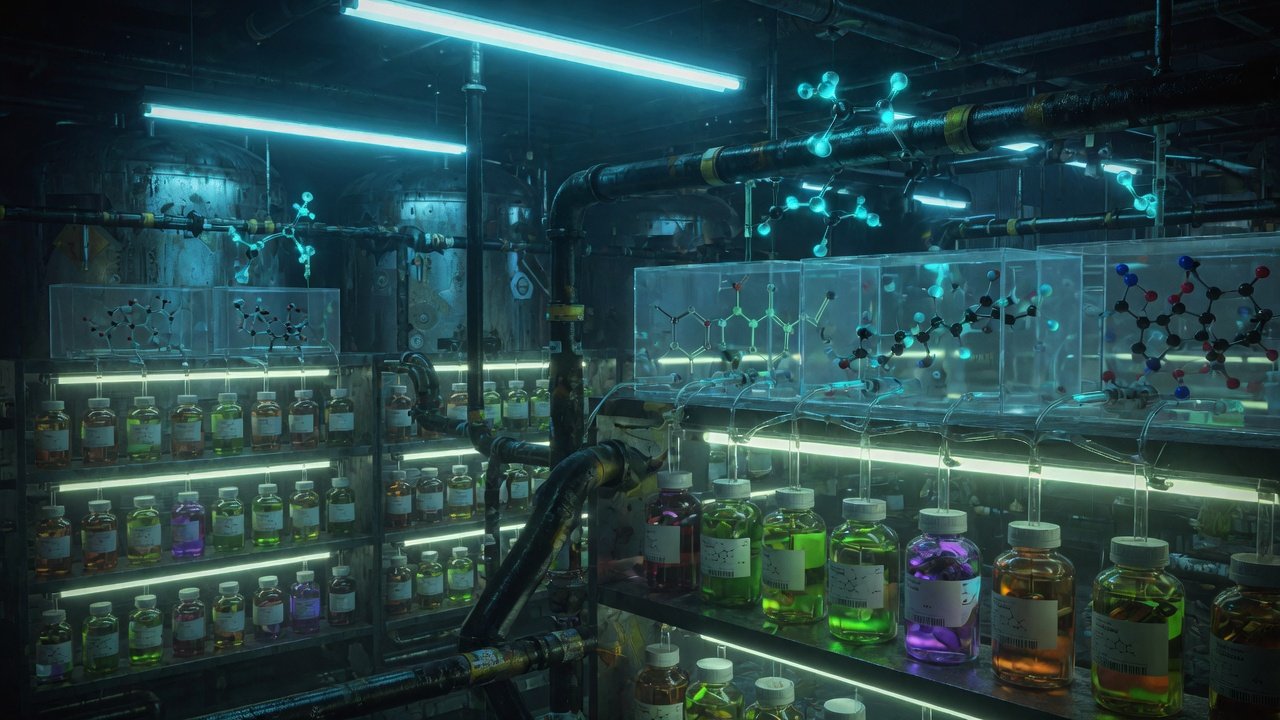
The modern pharmacy is the downstream of oil and industrial chemistry:
- Symptoms managed with molecules; root causes of terrain, nutrition, and toxicity sidelined.
- Regulatory capture and revolving doors keep the paradigm self-reinforcing.
- Adverse events and failure rates are normalized as “the cost of science.”
- Marketing, journal influence, and guideline committees turn industrial consensus into medical law.
Related dossiers: What’s in a vaccine? · Terrain Theory · Vaccines sector · Health & Medicine · Big Pharma.
Sector 07 / 10
Part 07 What got suppressed

Anything hard to patent, hard to monopolize, or hard to bill as a procedure was pushed to the margins:
- Herbal and traditional systems — millennia of empirical practice, recoded as “unscientific.”
- Nutrient and mineral repletion as first-line strategy instead of lifelong prescriptions.
- Frequency, light, water, and terrain-based approaches that do not fit the molecule-as-product model.
- Independent practitioners outside the hospital-pharma loop — often harassed, de-licensed, or memory-holed.
See also: Herbalist’s Charter & colloidal silver · Mineral deficiency · Defy Your Doctor and Be Healed.
Sector 08 / 10
Part 08 Licensing & the closed door
Capture is incomplete without a gate. After Flexner, the remaining structure was not free debate among healing systems — it was a closed professional pipeline:
- Accreditation decides which schools count.
- Licensing decides who may practice.
- Boards and guidelines decide what “standard of care” means in court and clinic.
- Insurance and hospitals decide what gets paid — and what gets punished as “unproven.”
Result: Innovation that threatens the product line is not evaluated as science first — it is evaluated as a threat to the monopoly. The white coat becomes a franchise uniform.
Corbett’s episode keeps returning to this: the public argues policy brand names while the architecture of who may heal — and with what — stays off the ballot.
Sector 09 / 10
Part 09 Why costs stay sky-high
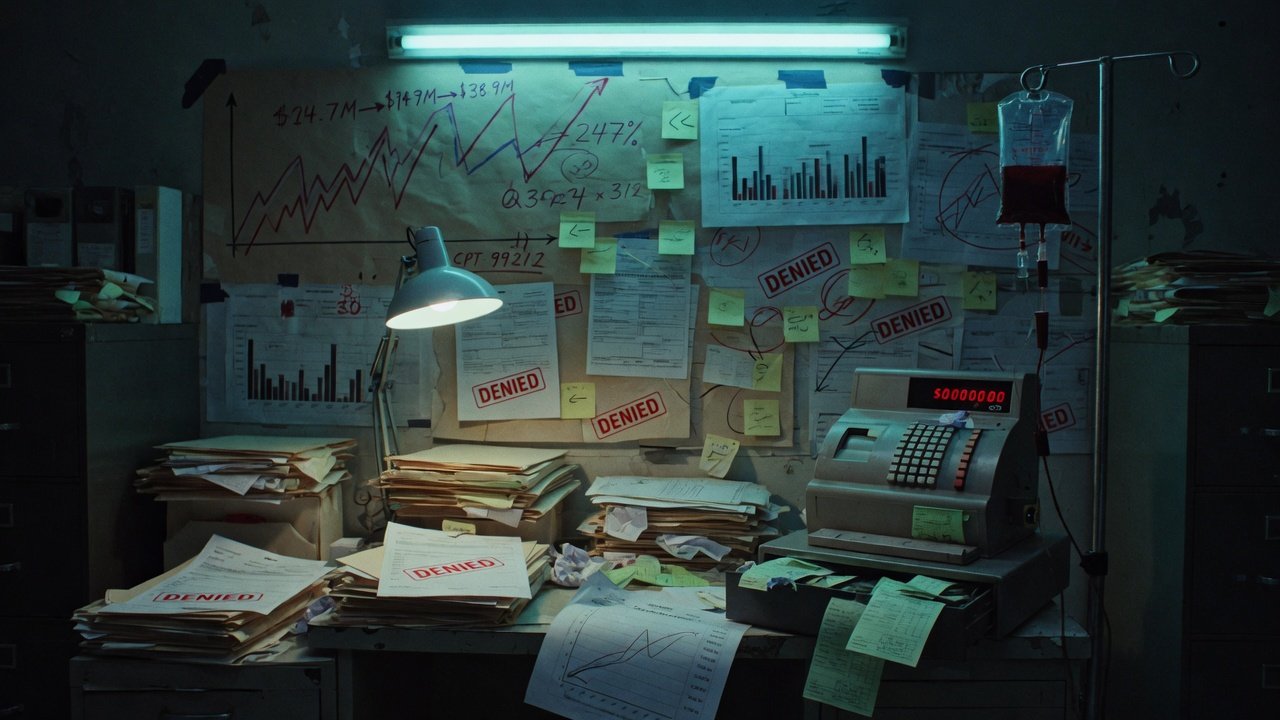
Corbett’s framing still hits: the public argues about websites and party brands while the cost structure is a monopoly inheritance.
- Insurance and hospital cartels bill inside a closed model.
- Chronic disease is more profitable than cure.
- Education still trains doctors inside the Flexner pipeline.
- Media treats foundation-funded consensus as neutral science.
- Left vs right healthcare debates rarely name Rockefeller medicine as the operating system.
This dossier does. Until the architecture is named — oil money, foundation power, patent chemistry, licensing gates — “healthcare reform” is rearranging furniture in a house someone else owns.
Sector 10 / 10 · Links
Part 10 Archive cross-links
Continue the trail across the Jamie Freeman archive:
- How Big Oil Conquered the World — same dynasty, full petrochemical map
- Terrain Theory — body terrain vs germ theatre
- DO YOU KNOW WHAT’S IN A VACCINE?
- Herbalist’s Charter / colloidal silver
- Mineral deficiency — silent killer
- Defy Your Doctor and Be Healed
- Corbett Report — Rockefeller Medicine (show notes & MP3)
- Health & Medicine sector · Big Pharma · Energy · Books library
Key takeaways
Rockefeller Medicine in one pass
- Modern medicine was reorganized by oil-foundation capital in the early 20th century.
- Flexner-era reform standardized patent chemistry and closed rival schools.
- Pharmacy is downstream of petrochemistry; chronic management beats cure.
- Licensing and accreditation closed the door on competing healing systems.
- Today’s cost and “trust the science” culture sit on that monopoly architecture.