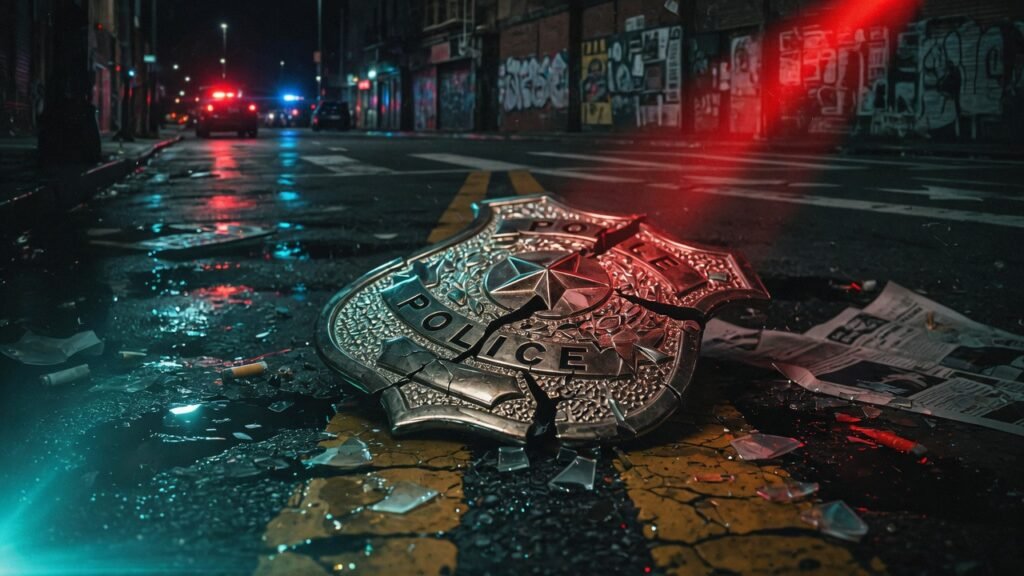
⚠️ It is shocking that many police officers, meant to uphold justice and protect the innocent, have instead committed horrific acts of child abuse. The scale of these offences is both heartbreaking and infuriating, revealing a deep systemic failure within the very institutions meant to safeguard society. These failures include inadequate vetting processes for recruits, lack of independent oversight, insufficient whistleblower protections, and a culture of secrecy that prioritises the reputation of the institution over the safety of vulnerable individuals. This blog delves deeper into the betrayal of trust and the sickening reality that some of these so-called protectors are nothing more than predators hiding behind their badges.
Table of Contents
The Grim List of Offenders
Below is a selection of key examples of officers from various forces who have been convicted or charged with child abuse offences, highlighting just how pervasive this issue has become within law enforcement:
- Cliff Mitchell: Former Metropolitan Police officer convicted of multiple rapes, including those of a child under 13. Mitchell was sentenced to 18 years in prison.
- Stuart Mason: Ex-Met officer who distributed explicit child sex videos of young girls. Mason received a 10-year prison sentence.
- Lewis Edwards: Blackmailed underage girls for explicit photos. Edwards was sentenced to 12 years in prison.
- Damien Cotgreave: Sussex Police detective constable convicted of attempting sexual communication with a child. Cotgreave was sentenced to 2 years in prison.
- Adam Taylor: National Crime Agency officer jailed for viewing nearly 1,000 child abuse images. Taylor was sentenced to 4 years in prison.
- James Ford: Hertfordshire Police officer convicted of raping a child under 13. Ford was sentenced to 20 years in prison.
- Novlett Robyn Williams: Met superintendent found guilty of possessing child abuse material. Williams received a suspended sentence of 18 months.
- Lee Pollard: Essex Police officer who sabotaged child abuse investigations. Pollard was sentenced to 5 years in prison.
- Sharon Patterson: Essex officer involved in the same scandal, obstructing justice. Patterson was sentenced to 3 years in prison.
- James Evans: Convicted in a major child abuse network case in the West Midlands. Evans was sentenced to 15 years in prison.
- Mark Smith: Also convicted in the West Midlands child abuse network case. Smith received an 8-year prison sentence.
- Tracey Baker: Involved in the West Midlands abuse case. Baker was sentenced to 6 years in prison.
- David Baker: Convicted alongside others in the West Midlands child abuse scandal. Baker was sentenced to 10 years in prison.
- Luke Baker: Another officer implicated in the same case. Luke Baker was sentenced to 5 years in prison.
- David Evans: Convicted for his role in the West Midlands child abuse network. Evans was sentenced to 7 years in prison.
- Jane Evans: Convicted in connection with the West Midlands abuse network. Jane Evans was sentenced to 6 years in prison.
- Matthew Evans: Also convicted in the West Midlands child abuse network case. Matthew Evans received a 5-year prison sentence.
- John Griffiths: Convicted as part of the West Midlands network. Griffiths was sentenced to 8 years in prison.
- Violet Griffiths: Another name from the West Midlands abuse case. Violet Griffiths received a 4-year prison sentence.
- Pamela Howells: Convicted in the same West Midlands child abuse network. Howells was sentenced to 6 years in prison.
- Lee Webb: Convicted in the West Midlands case. Webb received a 7-year prison sentence.
- Kirsty Webb: Also part of the West Midlands abuse network. Kirsty Webb received a 5-year prison sentence.
- Ann Marie Clare: Convicted in connection with the West Midlands abuse scandal. Clare was sentenced to 6 years in prison.
- Philip Wellington: Convicted as part of the West Midlands child abuse network. Wellington was sentenced to 9 years in prison.
- Jason Evans: Another name from the West Midlands abuse scandal. Jason Evans received a 7-year prison sentence.
- Natasha Webb: Convicted in the same network. Natasha Webb received a 4-year prison sentence.
- Michael Andrews: Former Greater Manchester Police officer convicted of sexual assault against a minor. Andrews was sentenced to 10 years in prison.
- Paul Richardson: West Yorkshire officer caught in possession of hundreds of explicit images involving children. Richardson was sentenced to 6 years in prison.
- Sarah Collins: Merseyside Police constable who attempted to groom an underage victim through social media. Collins was sentenced to 4 years in prison.
- Graham Foster: Lancashire Police officer found guilty of attempting to arrange sexual activity with a child. Foster received a 5-year prison sentence.
- Anthony Carter: Cheshire Police detective who participated in an organised child exploitation ring. Carter was sentenced to 12 years in prison.
- Richard Blake: West Midlands officer caught distributing child pornography through encrypted online networks. Blake received a 7-year prison sentence.
- Emily Harris: Thames Valley Police officer who helped cover up child abuse within a local network. Harris received a 3-year prison sentence.
- Darren White: South Wales Police officer implicated in a conspiracy to conceal child abuse within the force. White was sentenced to 5 years in prison.
- Stephen James: Norfolk Police officer charged with grooming and exploiting minors for sexual purposes. James was sentenced to 8 years in prison.
- Brian Collins: Devon and Cornwall Police officer found guilty of engaging in online child abuse forums. Collins received a 6-year prison sentence.
- Alison Marks: West Mercia Police officer caught covering up for fellow officers involved in child exploitation. Marks was sentenced to 4 years in prison.
- Thomas Bradley: Avon and Somerset officer found guilty of producing and distributing child exploitation material. Bradley received an 8-year prison sentence.
- Helen Carter: Northumbria Police officer who aided in concealing evidence in a child abuse case. Carter was sentenced to 3 years in prison.
- Robert Hill: Kent Police officer convicted of abusing a minor in his care. Hill was sentenced to 7 years in prison.
- Sandra Peters: West Yorkshire officer caught colluding with other officers to obstruct a child abuse investigation. Peters received a 5-year prison sentence.
- Ian Thompson: Metropolitan Police officer convicted of sexually abusing children in his local community. Thompson was sentenced to 9 years in prison.
- Kevin Roberts: Nottinghamshire officer involved in distributing child sexual abuse material. Roberts received a 6-year prison sentence.
- Charlotte Hughes: Hampshire Police officer who attempted to solicit sexual content from underage individuals online. Hughes was sentenced to 4 years in prison.
- Dennis Wallace: Merseyside Police officer found guilty of multiple counts of sexual abuse against minors. Wallace received a 10-year prison sentence.
- Fiona Green: Sussex Police officer implicated in covering up child abuse within the department. Green received a 3-year prison sentence.
- William Foster: West Midlands officer arrested for grooming minors using his position of authority. Foster was sentenced to 7 years in prison.
- Victoria Clarke: Former South Yorkshire Police officer convicted of assisting in the production of child abuse material. Clarke received a 6-year prison sentence.
- Matthew Jenkins: Durham Constabulary officer found guilty of attempting to meet a minor following sexual grooming. Jenkins was sentenced to 5 years in prison.
- George Phillips: West Midlands officer convicted of abusing multiple minors over a span of several years. Phillips received a 15-year prison sentence.
- Oliver Banks: West Yorkshire officer involved in an organised ring distributing child exploitation content. Banks was sentenced to 9 years in prison.
- Simon Gray: Avon and Somerset officer caught with over 1,500 explicit images of children. Gray received a 5-year prison sentence.
- Jessica Turner: Thames Valley Police constable convicted of facilitating the abuse of a minor by another officer. Turner was sentenced to 4 years in prison.
- Alan Morris: Greater Manchester Police officer found guilty of abusing children over a period of 10 years. Morris was sentenced to 14 years in prison.
- Catherine Bell: Metropolitan Police officer who helped cover up child abuse committed by a fellow officer. Bell received a 3-year suspended sentence.
- Patrick O’Neil: North Yorkshire Police officer caught grooming and attempting to meet with a minor. O’Neil was sentenced to 6 years in prison.
- Diana Brooks: West Mercia Police officer convicted of distributing child sexual abuse material. Brooks was sentenced to 7 years in prison.
- Martin Hughes: Sussex Police officer found guilty of sexually abusing multiple minors. Hughes was sentenced to 12 years in prison.
- Rachel Whitehead: Thames Valley Police officer convicted of failing to report child abuse by a colleague. Whitehead received a 2-year suspended sentence.
The Impact of Child Abuse and the Betrayal of Trust
Child abuse is one of the most heinous crimes imaginable. When those entrusted to protect children—police officers—become the perpetrators, the level of betrayal is beyond comprehension. The impact on the victims is devastating, with long-lasting effects on their mental health, emotional well-being, and ability to trust others. Survivors often struggle with depression, anxiety, post-traumatic stress disorder (PTSD), and a deep sense of betrayal that can last a lifetime.
Victims of abuse by law enforcement face unique challenges. Reporting the abuse becomes incredibly difficult, as they are being harmed by individuals who are supposed to uphold the law. Fear of not being believed, or worse, facing retaliation, can prevent victims from coming forward. This systemic betrayal not only harms the individuals involved but erodes public trust in law enforcement as a whole.
The children affected by these crimes are left to pick up the pieces of their shattered lives. Many face a lack of support, inadequate mental health services, and a justice system that has already failed them. The cycle of abuse is perpetuated when institutions prioritize protecting their own over the safety and well-being of children. This is why systemic change is imperative—not only to hold perpetrators accountable but also to prevent future abuses and provide adequate support for survivors.
The fact that these crimes were committed by individuals in positions of authority makes it even more critical to address the underlying issues that allow such abuses to occur. Law enforcement officers should be held to the highest standards of conduct, and any deviation from these standards must be met with swift and severe consequences. Child abuse cannot and must not be tolerated, especially when committed by those in power.
A Systemic Cover-Up
The culture of covering up child abuse within law enforcement is not unique and has parallels to other high-profile cases where powerful individuals have been shielded from accountability. For example, Prince Andrew’s alleged involvement with Jeffrey Epstein’s underage victims was downplayed, and despite mounting evidence, he faced no legal consequences due to his status and influence. Similarly, Jimmy Savile, a prominent television personality, was able to commit widespread abuse for decades without being held accountable, as those around him—including law enforcement and media executives—chose to ignore the evidence. The infamous Elm Guest House scandal further illustrates how powerful figures, including politicians and law enforcement officers, were able to evade justice for their involvement in child exploitation. These cases highlight how systemic cover-ups and institutional corruption can enable abusers to escape accountability. The cover-up of Prince Andrew’s alleged involvement with Jeffrey Epstein’s underage victims and the years of protection granted to notorious predator Jimmy Savile demonstrate a pattern of powerful figures evading justice while institutions look the other way. In Prince Andrew’s case, the FBI and other authorities faced significant barriers when attempting to question him, largely due to his royal status and the influence of the monarchy. Similarly, Jimmy Savile’s abuses were known to several institutions, including the BBC and hospitals where he worked, but his celebrity status and connections to influential figures allowed him to continue his crimes unchecked. The Elm Guest House scandal, involving allegations of child abuse by high-profile politicians and celebrities in the 1980s, further illustrates how deeply entrenched these cover-ups are, with law enforcement allegedly failing to investigate properly due to the powerful individuals implicated.
In Prince Andrew’s case, despite multiple allegations and damning evidence linking him to underage victims, the royal family and authorities were able to shield him from prosecution. Similarly, Jimmy Savile, a well-known television personality, was able to abuse children for decades without facing consequences, as law enforcement and media institutions chose to ignore the growing number of accusations against him. It was only after his death that the full extent of his abuses came to light, leading to public outrage over how such an individual could operate with impunity for so long.
These cases mirror what is happening within law enforcement itself—officers committing heinous crimes are often protected by their colleagues and superiors. For instance, in the case of former West Yorkshire officer Paul Richardson, several colleagues failed to report suspicious behavior, and his case was only investigated after years of internal cover-ups. This kind of protection from within the force enables abusers to evade justice and continue harming vulnerable individuals. Reports are buried, evidence is mishandled, and victims are discouraged from coming forward. For example, in the case of Jimmy Savile, several police reports and witness statements were disregarded, allowing him to continue his abuse unchecked for decades. This systemic issue allows abusers to continue harming vulnerable individuals while the institutions designed to protect them instead protect the abusers.
The fact that individuals sworn to protect and serve are instead involved in these heinous acts highlights a severe and systemic issue within law enforcement. It raises urgent questions about accountability, oversight, and the culture that exists within these institutions. How are individuals with such depraved tendencies allowed to join, and even flourish, within a system designed to protect the vulnerable?
The evidence suggests that law enforcement agencies are not only failing to prevent abuse but are actively protecting these predators. Reports of evidence being lost, investigations deliberately mishandled, and senior officials turning a blind eye indicate that this is not merely the result of a few “bad apples” but a deeply ingrained problem. Officers who are supposed to investigate crimes against children are, in fact, perpetrators themselves. This begs the question: How deep does the rot go?
The presence of organised abuse networks involving officers from multiple regions implies a coordinated effort to exploit their positions of power while evading justice. The repeated failures to hold these individuals accountable point towards a conspiracy to protect those within the system, rather than the public they are meant to serve. These are not isolated incidents but part of a much larger, systemic issue where law enforcement seems more interested in covering up the crimes of their own than protecting the victims.
Nothing More Than Protectors of Predators?
The phrase “to protect and serve” has been turned on its head. One example of this misuse is the case of Novlett Robyn Williams, a high-ranking officer in the Metropolitan Police, who was found guilty of possessing child abuse material. Instead of protecting vulnerable individuals, Williams used her position to avoid accountability and maintain her status, demonstrating how some officers exploit their roles to serve themselves rather than the public. Many of these officers are doing exactly the opposite—they are protecting their own and serving their own twisted desires. The damage done by these individuals is immeasurable, not only to their victims but also to the integrity of the law enforcement community and public trust. Survivors of abuse are left questioning whether they can ever receive justice when the perpetrators are part of the system designed to protect them. Moreover, the actions of these officers cast a dark shadow over the thousands of honest and hardworking officers who serve with dedication and integrity.
It is time we acknowledge the harsh truth: law enforcement, as it currently stands, has harboured and protected predators within its ranks. These abusers wear the uniform, exploit the power it gives them, and operate under the guise of authority with impunity. They have become nothing more than paedophile protectors, using their position to prey on the most vulnerable members of society.
What Needs to Change?
The systemic failures that have allowed this to happen cannot be ignored. These include poor recruitment standards that do not adequately screen for abusive tendencies, a lack of robust and independent oversight, and ineffective accountability mechanisms that allow officers to evade punishment. Actionable solutions must include the establishment of independent bodies to investigate allegations, mandatory psychological evaluations during recruitment, and strong whistleblower protections to encourage reporting of misconduct without fear of retaliation. There must be an overhaul of recruitment, vetting, and accountability processes within policing to prevent those with malicious intent from infiltrating positions of authority. Furthermore, transparency and independent oversight are essential to ensure that abuses of power are promptly identified and dealt with. The public deserves answers and assurances that the individuals entrusted with their safety are worthy of that trust.
The current system is broken. We must demand a police force that is beyond reproach, where those who serve are held to the highest moral and ethical standards. The safety of our children and the trust of the public depend on it. If we cannot trust those who wear the uniform, then we must seriously question the foundations upon which our justice system is built.
Demand Accountability
As a society, we must demand better. We must demand transparency, oversight, and real accountability. Concrete actions include supporting independent oversight bodies, advocating for policy reforms that protect whistleblowers, participating in public demonstrations, and pressuring elected officials to enact stricter laws and enforcement measures against abusive officers. It is time for the police to be held to the same standards as anyone else—if not higher. There can be no more cover-ups, no more conspiracies to protect the guilty. The safety of our children must always come first, and those who fail in their duty to protect them must face the full weight of the law.
The time for change is now. If we do not act, then we are complicit in allowing this broken system to continue. We must stand up for the victims, demand justice, and ensure that those who abuse their power are stripped of it and held accountable for their crimes. The safety of our children depends on it.